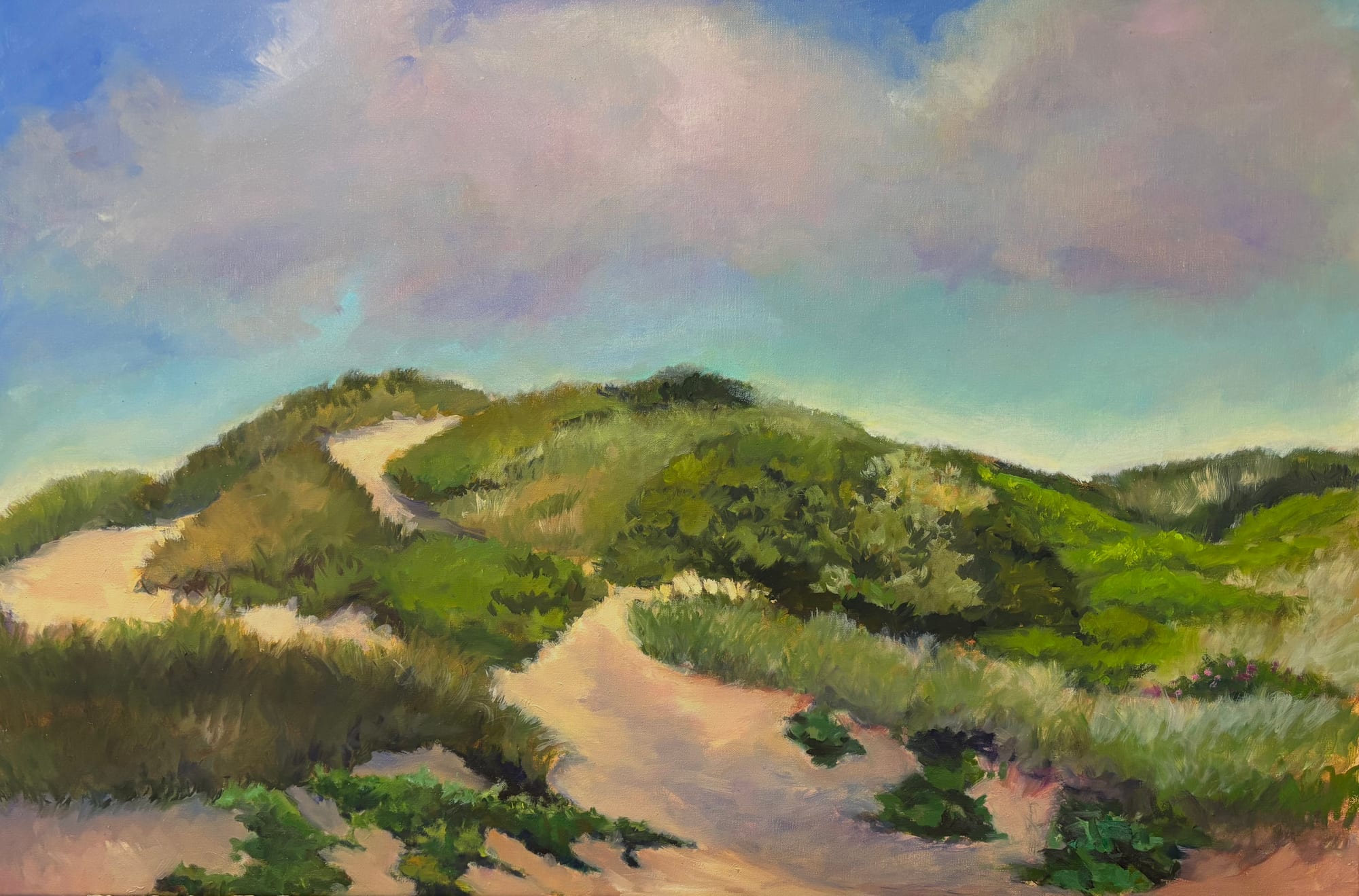
You carry the easel to the scene, stand in the weather with the subject in front of you, and finish before the light moves. That is the whole of it.
The term is French, en plein air, in the open air. It means painting outdoors, on location, with the thing itself in front of you, usually in a single sitting. That last part is what separates it from every other way of making a landscape. The light moves, the tide goes out, a cloud parks over the one hill you cared about. What you get down before that happens is the painting.
How it goes
The clock decides. Shadows swing and shorten as the sun climbs, so a shadow you painted at the start of the morning is in the wrong place and the wrong color by the middle of the day. You get two or three hours before the scene you began on is gone. You cannot render a marsh blade by blade in that time, so you state a mass, get its value and temperature right, and move on. Half of learning to paint on location is learning what to refuse: the parked car, the third tree, the cloud that has nothing to do with your composition.
The rest is weather and nuisance. Wind that tips an easel or sandblasts a wet panel. Greenhead flies on the marsh in August. Glare that lies to you about your own values, which is why painters angle the panel out of direct sun. Cold hands in October, and the walk back to the car holding a wet canvas by its edges.
The places she goes back to
One painting from each of the places that recur in her work, on the Outer Cape and along the Connecticut shore and hills.
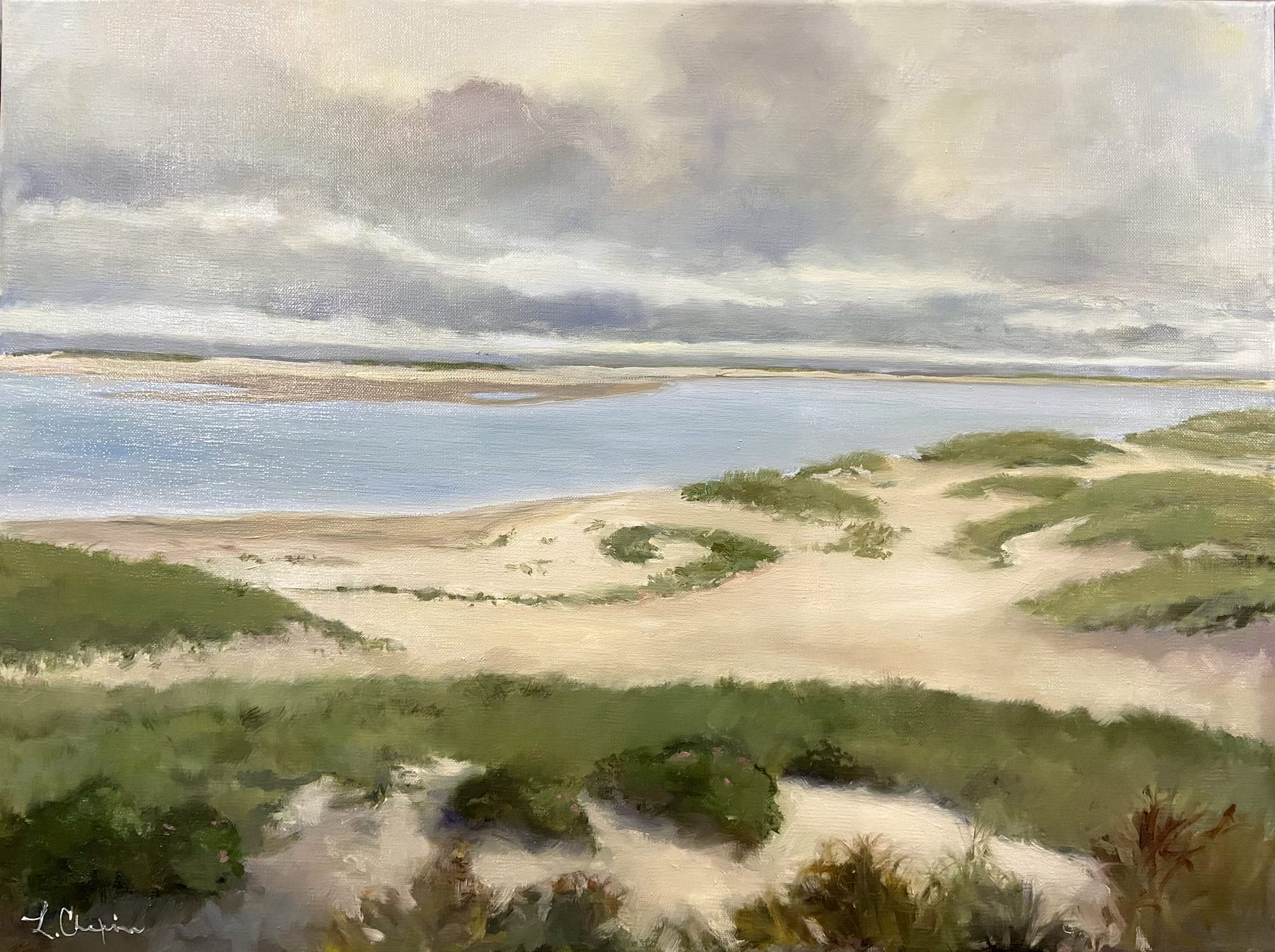
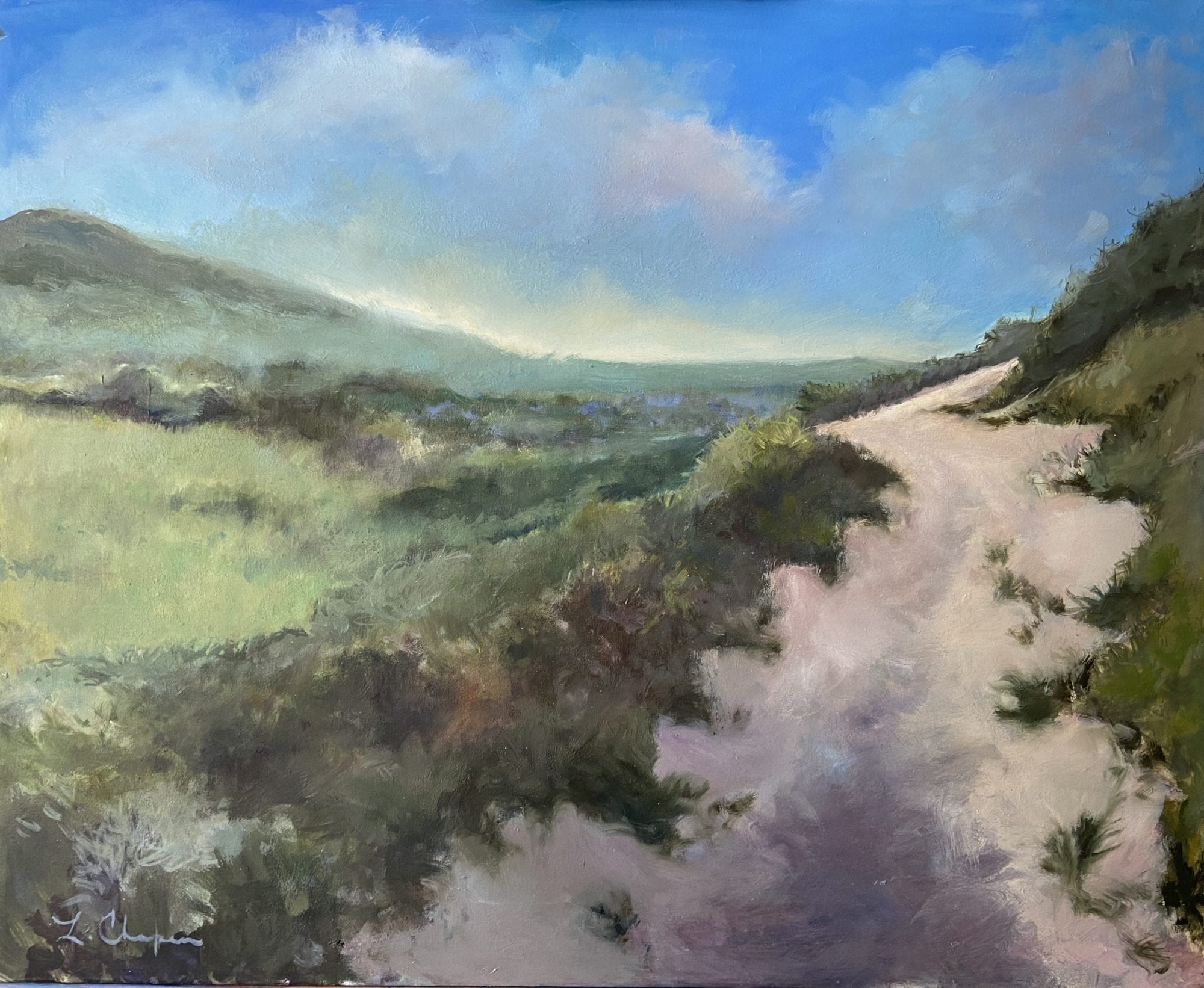
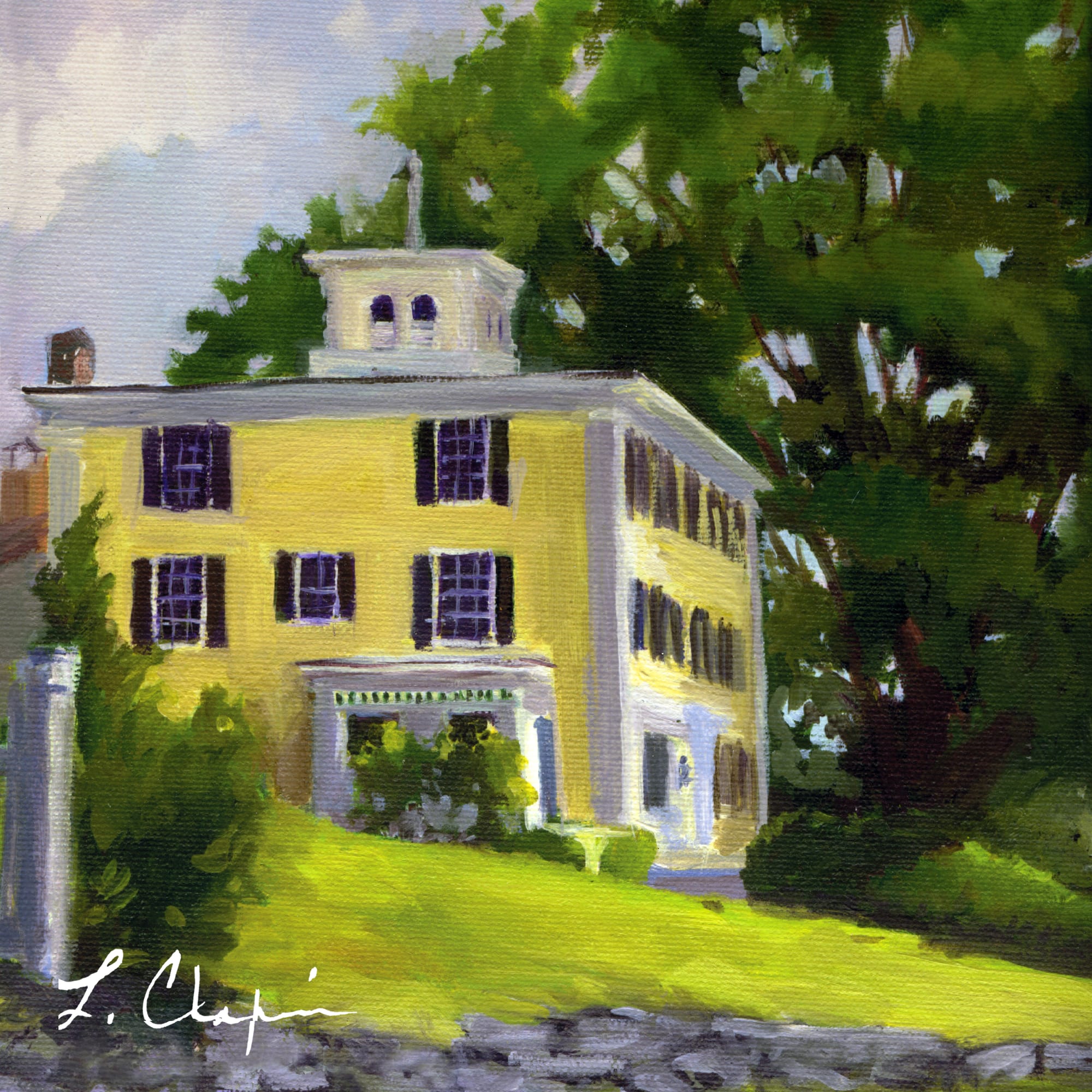
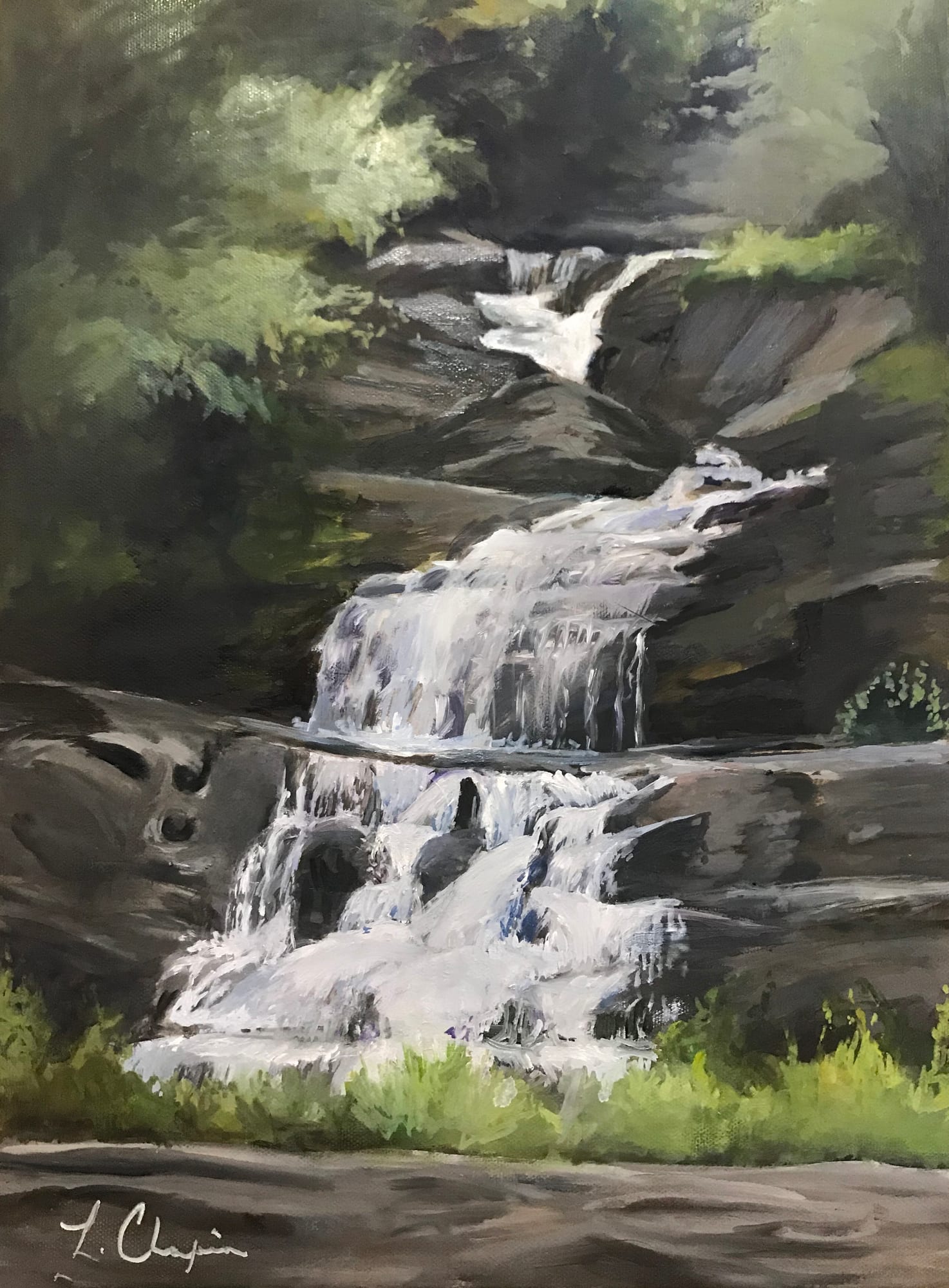
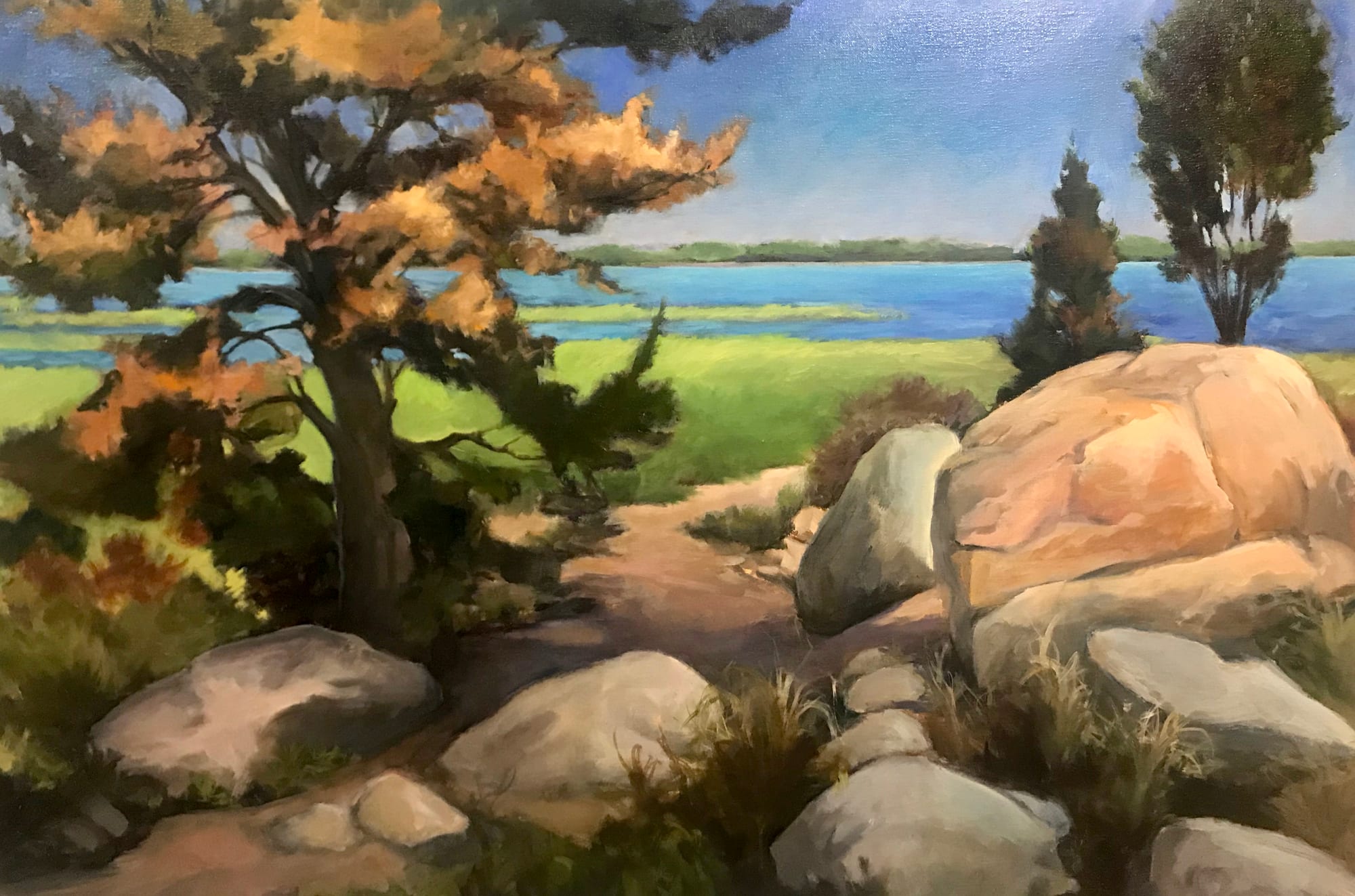
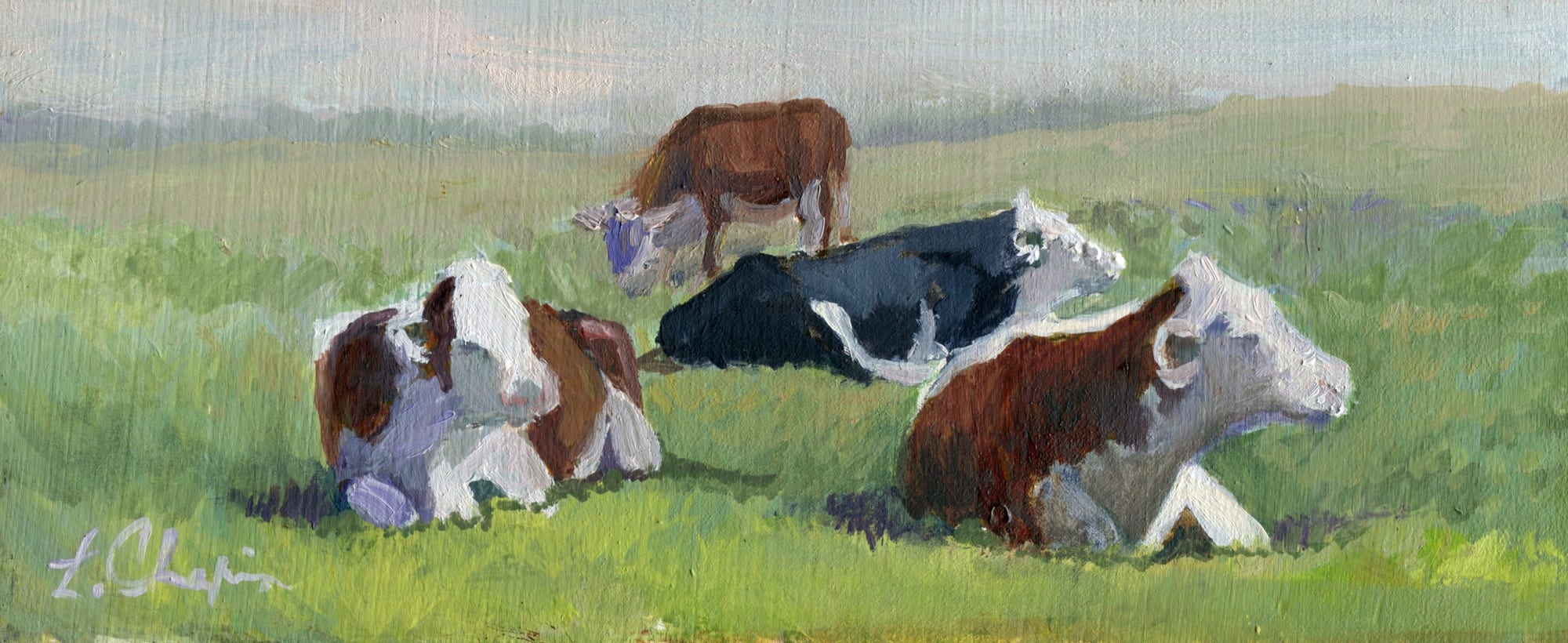
More of it sits with the Cape Cod paintings and the landscapes.
Where the term comes from
Painters have always made outdoor sketches, but for most of European history the finished landscape was assembled indoors from them. That began to change in France in the middle of the nineteenth century, when a group of painters settled near the village of Barbizon, on the edge of the Fontainebleau forest, and started treating what they saw out there as the subject itself. Hardware finished the job. Before 1841 paint was kept in pig bladders, which leaked and traveled badly, and in that year an American painter named John Goffe Rand patented the collapsible metal tube. Within a generation the Impressionists were working mostly in front of the subject, and by their first group exhibition in 1874 the outdoor picture, loose and fast and full of light, was the argument.
Americans brought it home and built colonies around it: Old Lyme, Cos Cob, Gloucester, Provincetown. Lorraine Skelskey-Chapin is an Associate Artist of the Lyme Art Association in Old Lyme, so the line from Barbizon to her easel is shorter than it looks.
Studio, photograph, location
The studio gives you time, control and a steady light. You can build a large canvas over weeks, let it dry, come back. Almost every big landscape you have admired in a gallery was finished indoors. What the studio cannot give you is the information, which is why the studio painter works from studies, memory or reference.
A photograph is convenient, and plenty of good work gets made from one. But a camera compresses. It crushes shadows to black, blows out a sky, flattens warm light against cool, and hands you a composition already decided by a lens. What Lorraine gets outdoors is the color she then trusts when she is working from a photograph indoors.
Location gives you the truest color and light you will get, under a deadline. The trade is size and finish. Many painters run all of it together: study on location, shoot reference for the detail, then build the large piece in the studio with the outdoor panel propped beside it as the color authority.
What you actually need
Less than the catalogs suggest. Something to hold a panel at eye level, a French easel, a light tripod easel, or a pochade box on a camera tripod. A few small panels, 8x10 or so. Paint in a limited palette, a few brushes, a palette knife, paper towels, a bag to carry it in. Water, a hat, sunscreen and bug spray, all of which matter more than the third brush you were about to buy.
For brands and quantities, the lists Lorraine gives her students are the oil materials list and the acrylic materials list. Buy the small version of everything first.
Connecticut and Cape Cod
Connecticut has a real claim on this. The colony that formed around Florence Griswold's boarding house in Old Lyme became a center of American Impressionism, and those painters went outside for the light on the Lieutenant River and the marshes behind it. The Lyme Art Association grew out of that colony and still runs juried exhibitions in Old Lyme, among them Paint the Town, a juried plein air competition. Lorraine took an Award of Merit there in 2025. She also paints with the Connecticut Plein Air Painters Society.
Inland there are Kent Falls and the hill towns, and on the shore Hammonasset and Meigs Point are close enough to Southbury for a morning. Then there is the Outer Cape, which has drawn painters since Charles Hawthorne opened his school in Provincetown in 1899, for a reason anyone who has stood on those dunes understands: light off the water on three sides, reflecting up from pale sand. Lorraine goes back to the same places year after year: Head of the Meadow, Race Point, Chatham Lighthouse Beach and the Provincetown dunes.
Where to learn it
Lorraine teaches painting in Southbury and takes students out on location. Runs periodically, weather permitting. The plein air sessions page says how a day outdoors is arranged, and the studio classes, where most people should begin, are under classes. If you are not sure which one fits, say what you have painted so far and Lorraine will tell you straight.
Questions
- Do I need to know how to draw before I paint outdoors?
- It helps, but not in the way people expect. You are not drawing detail out there. You are judging one shape against another and one value against another. If you can look at a field and see that the near grass is lighter and warmer than the far grass, you have the skill that matters most.
- How long does a plein air painting take?
- Two to three hours, because that is how long the light holds. Painters working small often finish in ninety minutes. Go past one sitting and you are putting two different times of day on one canvas, which shows up in the shadows.
- What size canvas should I take outside?
- Small. Around 8x10 or 9x12 for a first outing. A big canvas eats your two hours of good light, catches wind like a sail, and gives you room to fuss. Painters who work large outdoors are gathering studies and building the big picture in the studio.
- Oil or acrylic for painting outdoors?
- Both work. Oil stays open long enough to keep adjusting a passage, forgiving when the light is moving, but you carry solvent and a wet panel home. Acrylic dries fast, a nuisance in July heat and a gift when you want to work over something. Lorraine paints and teaches both.
- What do you do about wind, bugs and bad weather?
- Weight the easel by hanging your bag from it. Turn the panel out of the worst of the wind. Long sleeves near marsh and dune. Watch the sky, and accept that some days you drive out, look at it, and drive home. Painting outdoors includes deciding not to.
- Can a beginner start with plein air painting?
- Most people do better starting indoors. The outdoor sessions are pitched at painters with some mileage, because outside you solve light, weather and composition at once. A few months in a studio class first means the outdoor day is about seeing rather than wrestling with your materials.