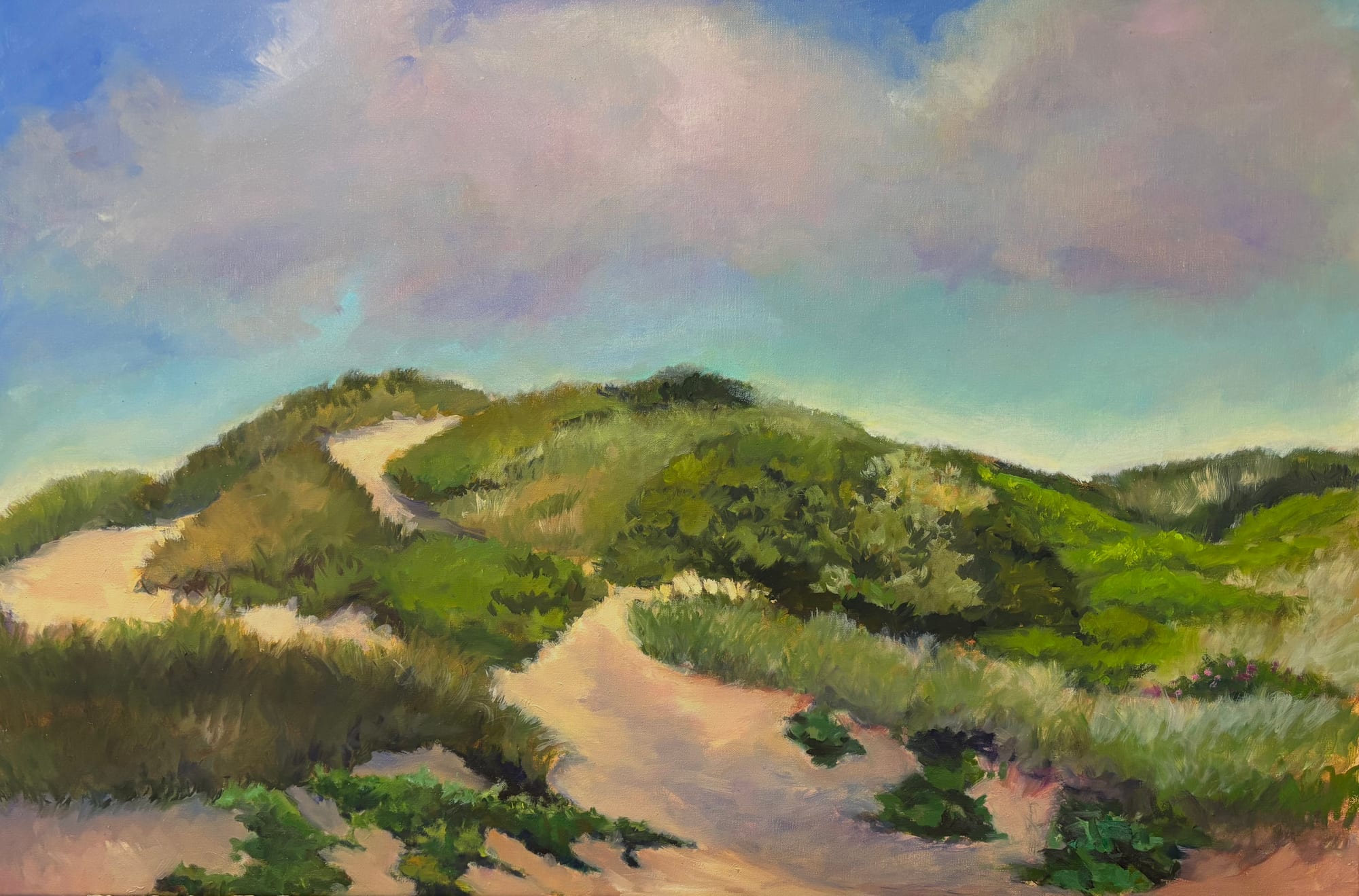
You paint in front of the thing itself, while the light is still doing what made you stop. The shadow you drew at ten o'clock is in the wrong place by noon, so you learn to say what the painting is about and to say it fast.
How this works
You bring what you can carry: a portable easel or a pochade box, small panels, a few colors, a rag. You walk for a few minutes and you choose a view. Choosing is usually the first thing Lorraine works on with someone new to it, because the common outdoor mistake is painting what is in front of you instead of the thing that made you stop.
Some days that produces a finished small painting. Some days it produces a study and a set of color notes that become a bigger canvas at home weeks later. Both are a good day, and deciding which one you are doing in the first ten minutes is worth more than any brush technique.
The places she paints
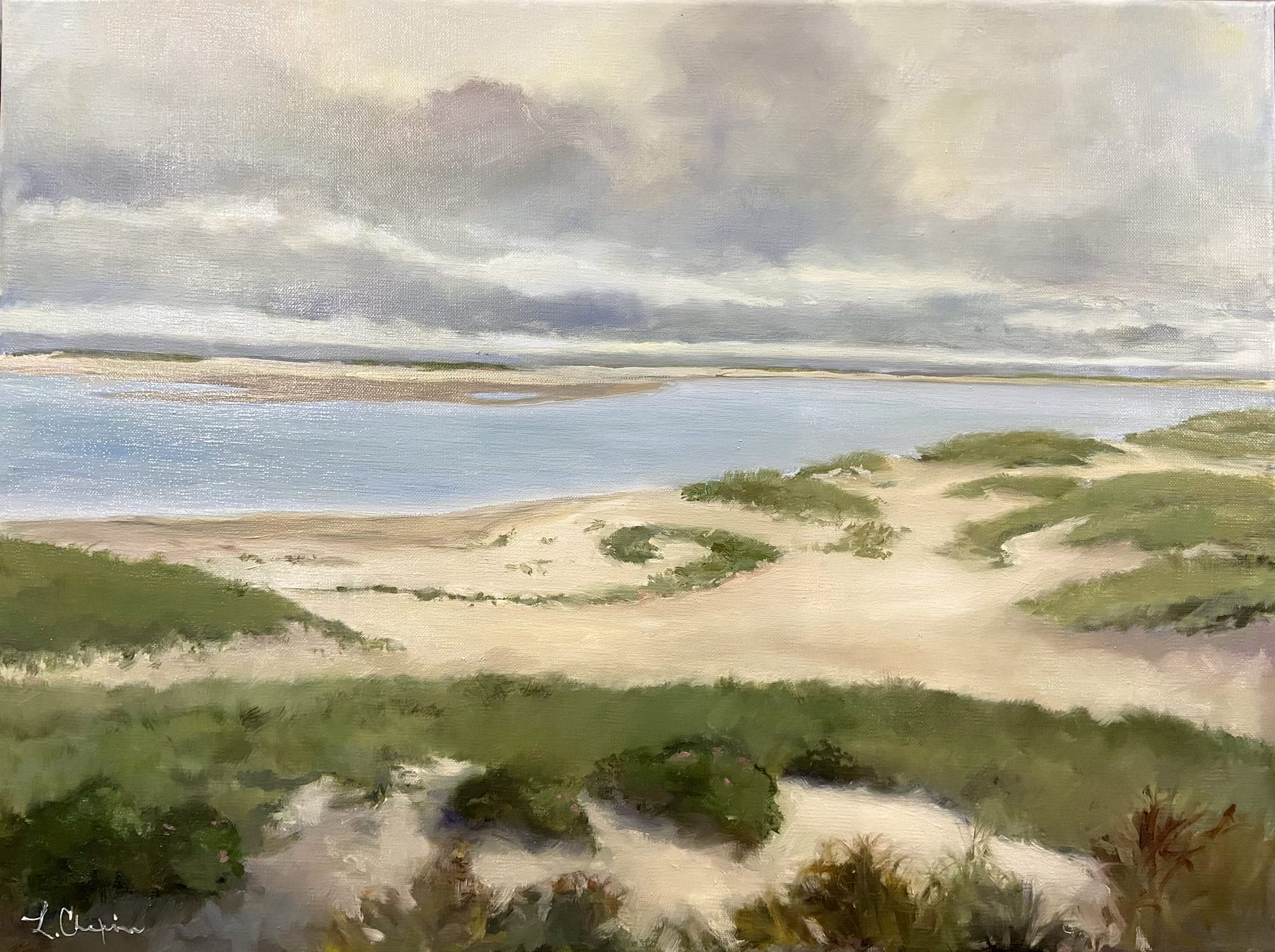
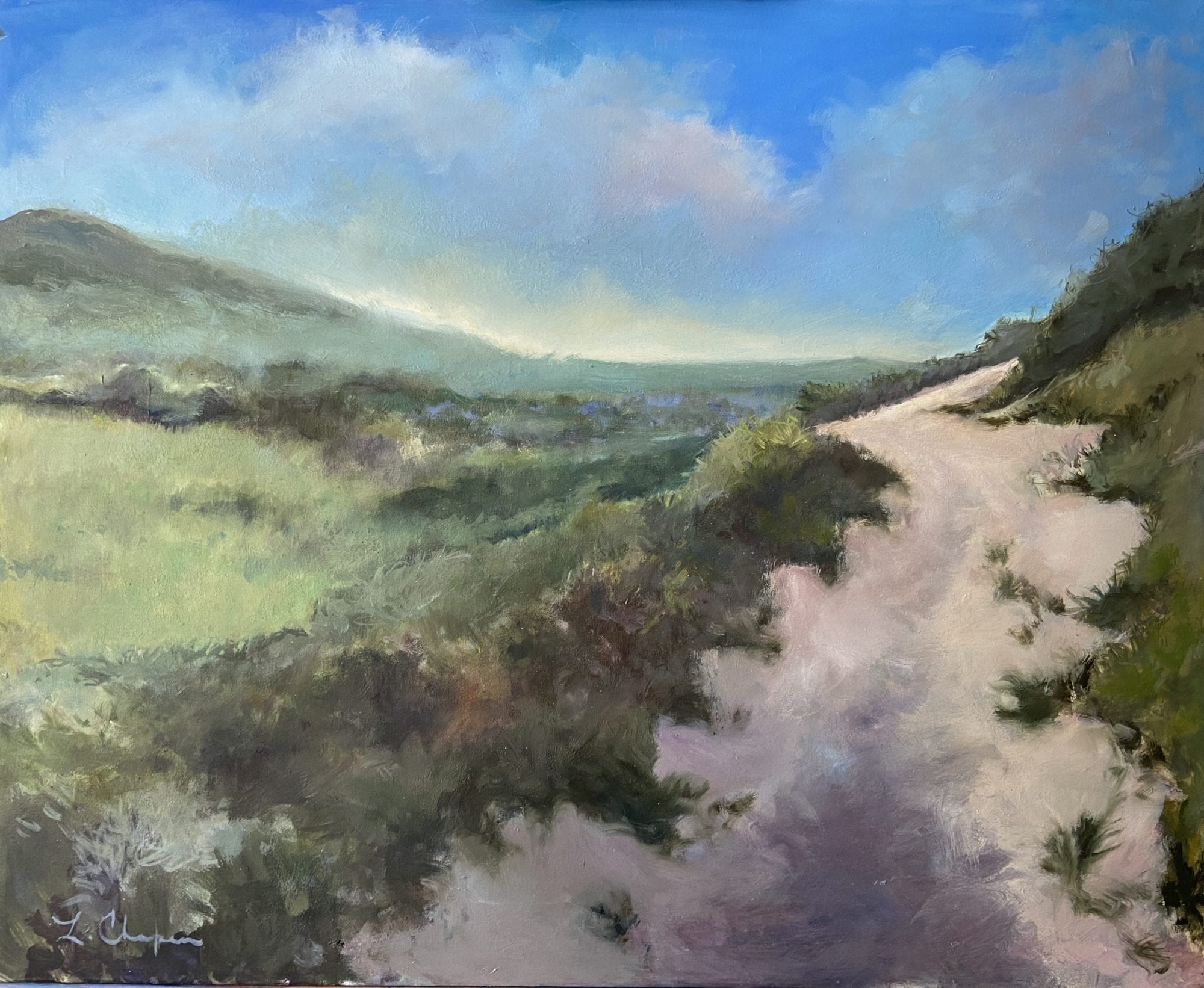
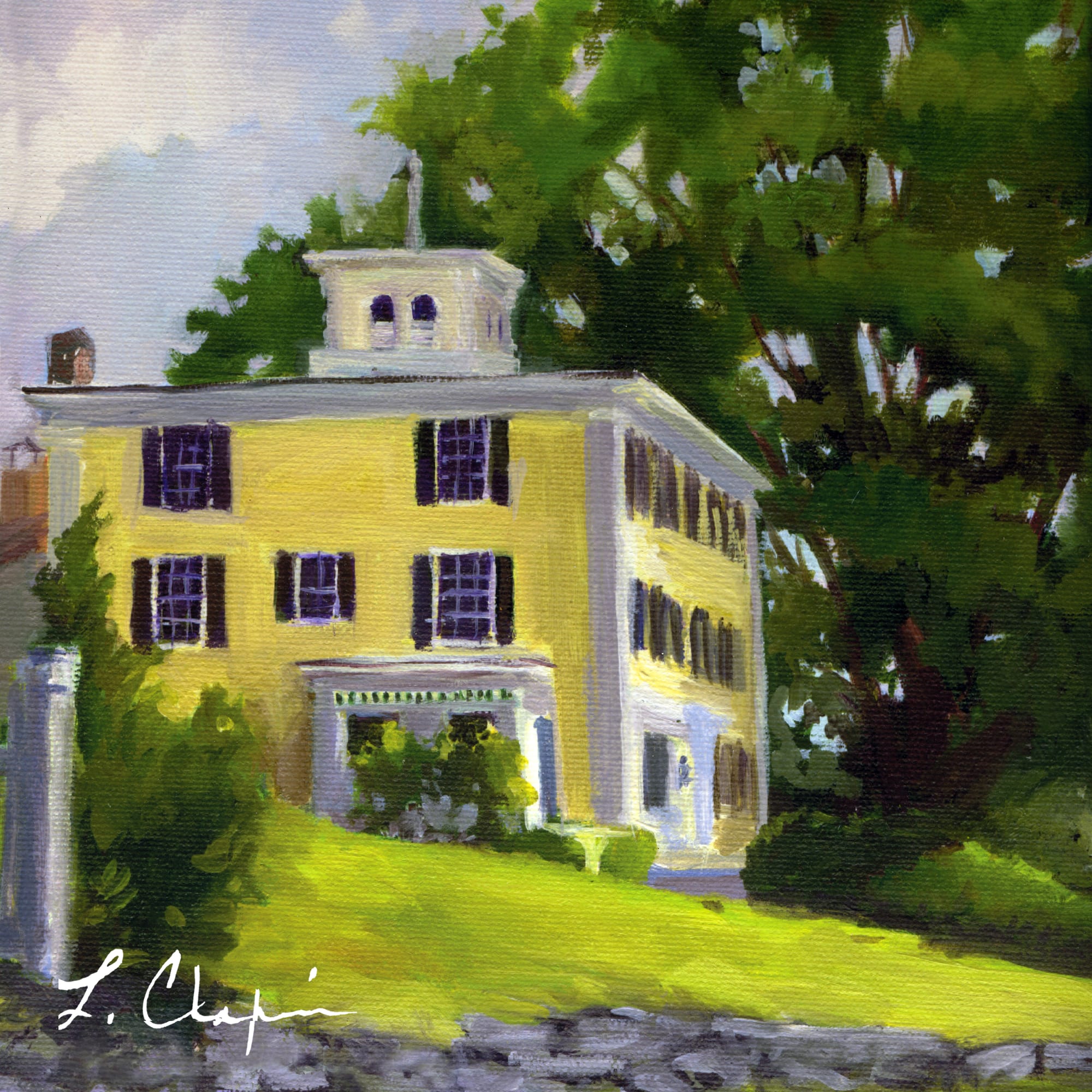
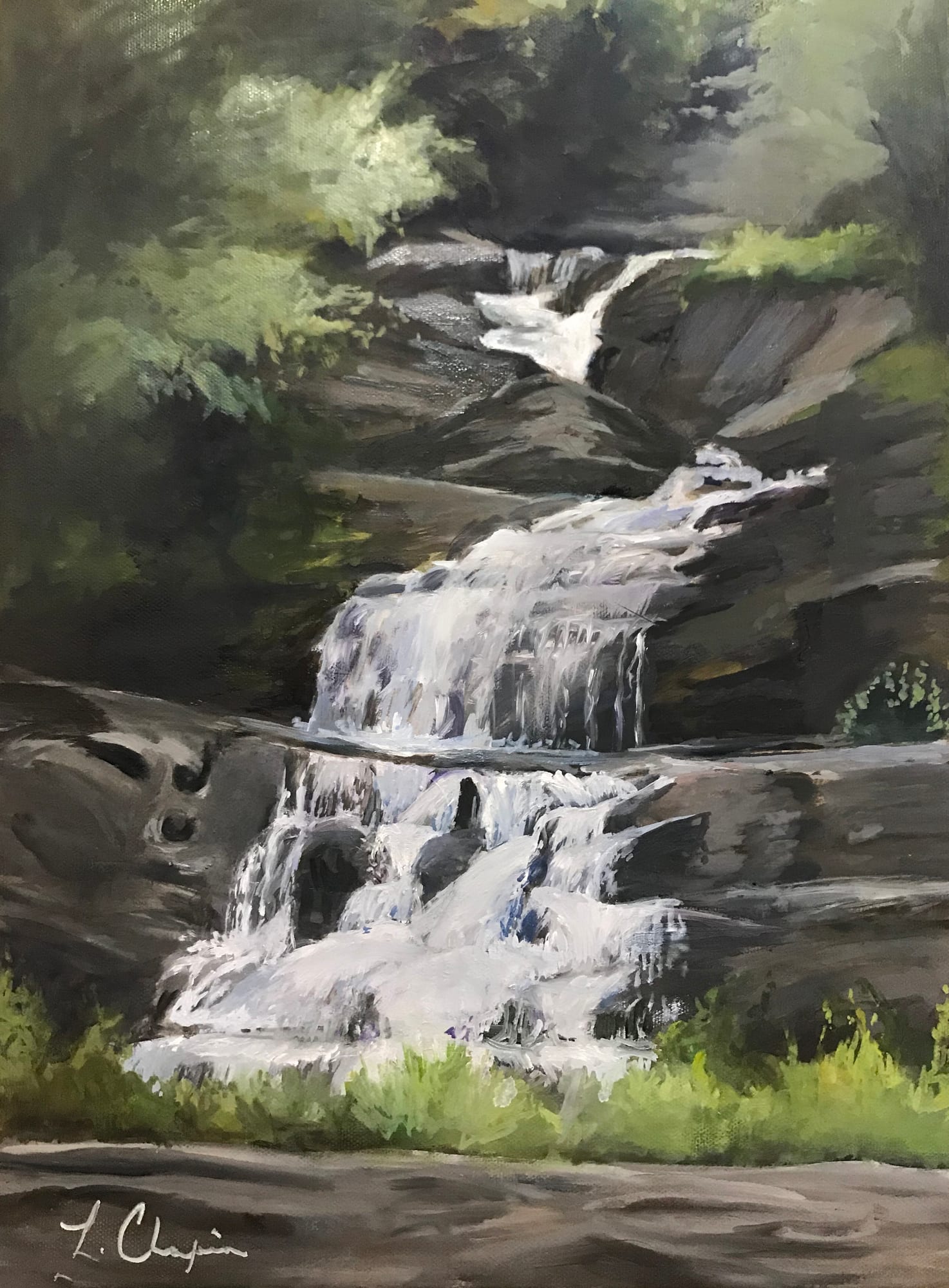
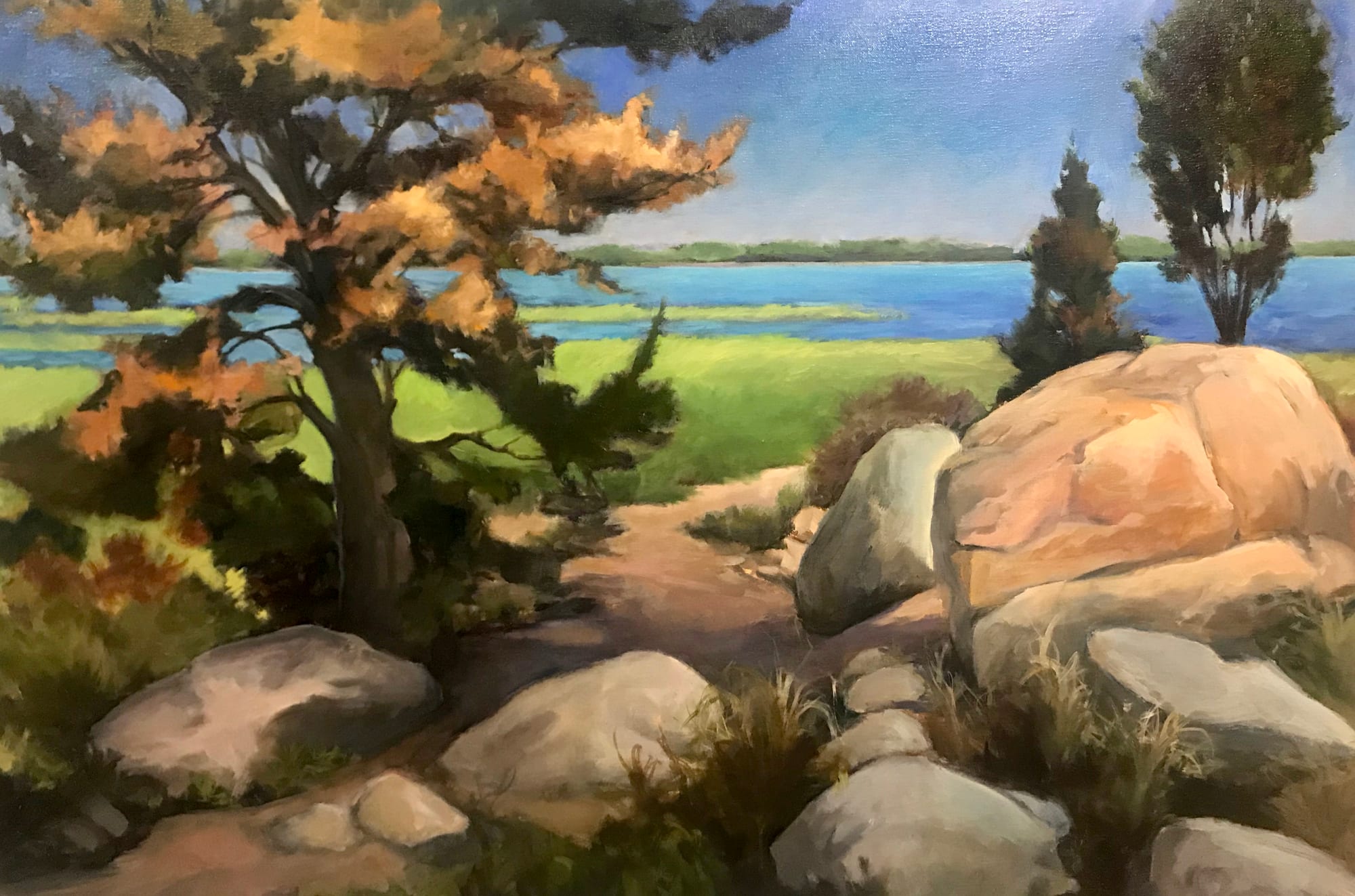
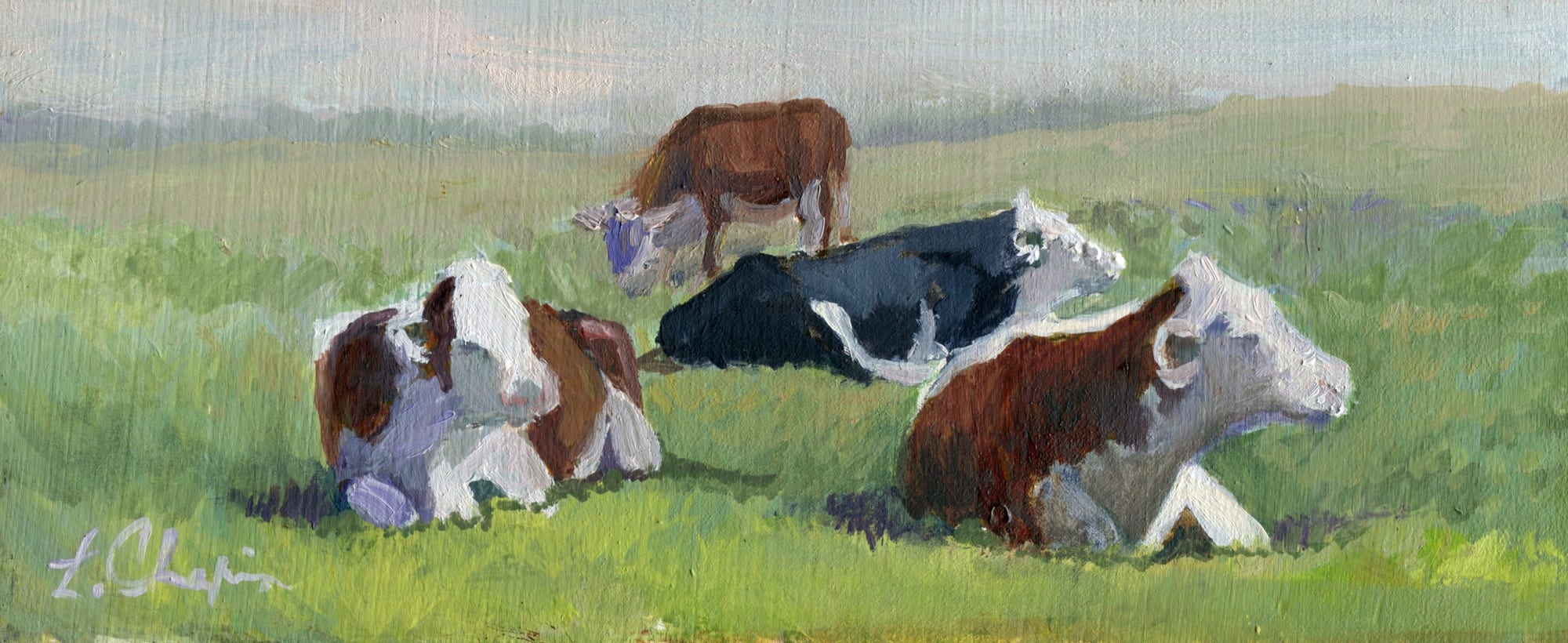
More of it sits in the Cape Cod and landscape collections, most of which began outside. If you want the longer version of why painters keep going out, there is a page on what plein air painting is.
Why she teaches outdoors
Lorraine Skelskey-Chapin is a member of the Connecticut Plein Air Painters Society, and her Award of Merit was won at Paint the Town, the Lyme Art Association's juried plein air competition in Old Lyme, juried that year by Eileen Eder. That award was earned outside, on location, under a clock, with the same kind of kit she asks a student to carry.
A studio is a controlled room. The light stays where you put it, the subject does not move, and you can leave a canvas on the easel for six weeks. Outdoors you lose all of that, and that is the point.
Working fast makes you decide what the painting is about before you have earned the right to fuss. Carrying less means a shorter argument with yourself over which of nine blues to reach for. You make decisions you would never make indoors: leaving a passage alone because there is no time to fix it, simplifying a treeline into two values, committing to a sky in four strokes. Those decisions survive into the studio work afterward, which is why painters keep going out.
When they run
Outdoors, when the weather allowsRuns periodically, weather permittingOil and acrylicAsk about current rates
There is no standing day and no standing time. Sessions are called when the forecast and the light are worth the drive, so they cluster in the warmer months and skip weeks entirely when the weather is against them. Locations change with the season, and the way to find out about the next one is to ask to be told.
What a session is like
Easel legs go into grass or sand, and you set up so your canvas is not in full sun. Wind will take a lightweight easel with it, so panels stay small and the kit stays weighted down. Sun on a white canvas lies to you about your values, which is why the canvas goes in shade if there is any to be had. Bugs, dew and a walk back to the car are part of the day.
Outdoors you bring a few colors and mix the rest, partly for weight and partly for discipline: a small palette holds a painting together in a way a large one rarely does. Lorraine works in oil and acrylic and teaches both outside. Acrylic behaves differently in heat and wind, which she will warn you about before you find out yourself.
Wear layers, closed shoes you do not mind ruining, a brimmed hat, sunscreen, and clothes you can get paint on. Neutral colors if you have them, because a bright white or red shirt bounces onto your canvas and quietly shifts every mix you make.
Who it suits
Some painting experience helps. A first-ever painting class is easier indoors, where the light holds still, which is why this one is listed intermediate and advanced. If you have painted a bit and this is what you want to do, get in touch and say what you have painted and what you are using. Lorraine will tell you whether to come out now or to start in the weekly studio sessions in Southbury and join a location session later.
Questions
- When do the sessions run?
- Runs periodically, weather permitting. There is no fixed weekly slot, because the weather decides. Ask to be on the list and you will hear before the next one is called.
- Do I need painting experience to come outdoors?
- Some helps, and it is not a requirement. Get in touch, say what you have painted so far, and Lorraine will tell you where to start.
- What do I bring?
- A portable easel or pochade box, small supports, a limited palette, a rag, water or solvent, and a way to carry a wet painting home. The oil and acrylic materials lists cover the paint side.
- What happens if the weather turns?
- The session moves, and everyone on the list for it hears directly. The weekly studio classes are unaffected.
- Do I have to finish a painting on location?
- No. A study that gets resolved at home later is a normal and useful outcome, and plenty of larger canvases start that way.