Lorraine Skelskey-Chapin is a fine artist and instructor in Southbury, Connecticut. She works in oil and acrylic, most often outdoors and in front of the thing she is painting, and she keeps going back to the same handful of places: the beaches at the outer end of Cape Cod, the Connecticut shoreline, the falls and back roads of the western hills, and the flower beds. In 2025 her work took an Award of Merit at Paint the Town, the Lyme Art Association's juried plein air competition in Old Lyme, judged that year by Eileen Eder. She is an Associate Artist of the Lyme Art Association, and her work is on exhibit at The Barn Gallery in New Fairfield, at the Lyme Art Association, in her own studio, and at local juried shows.
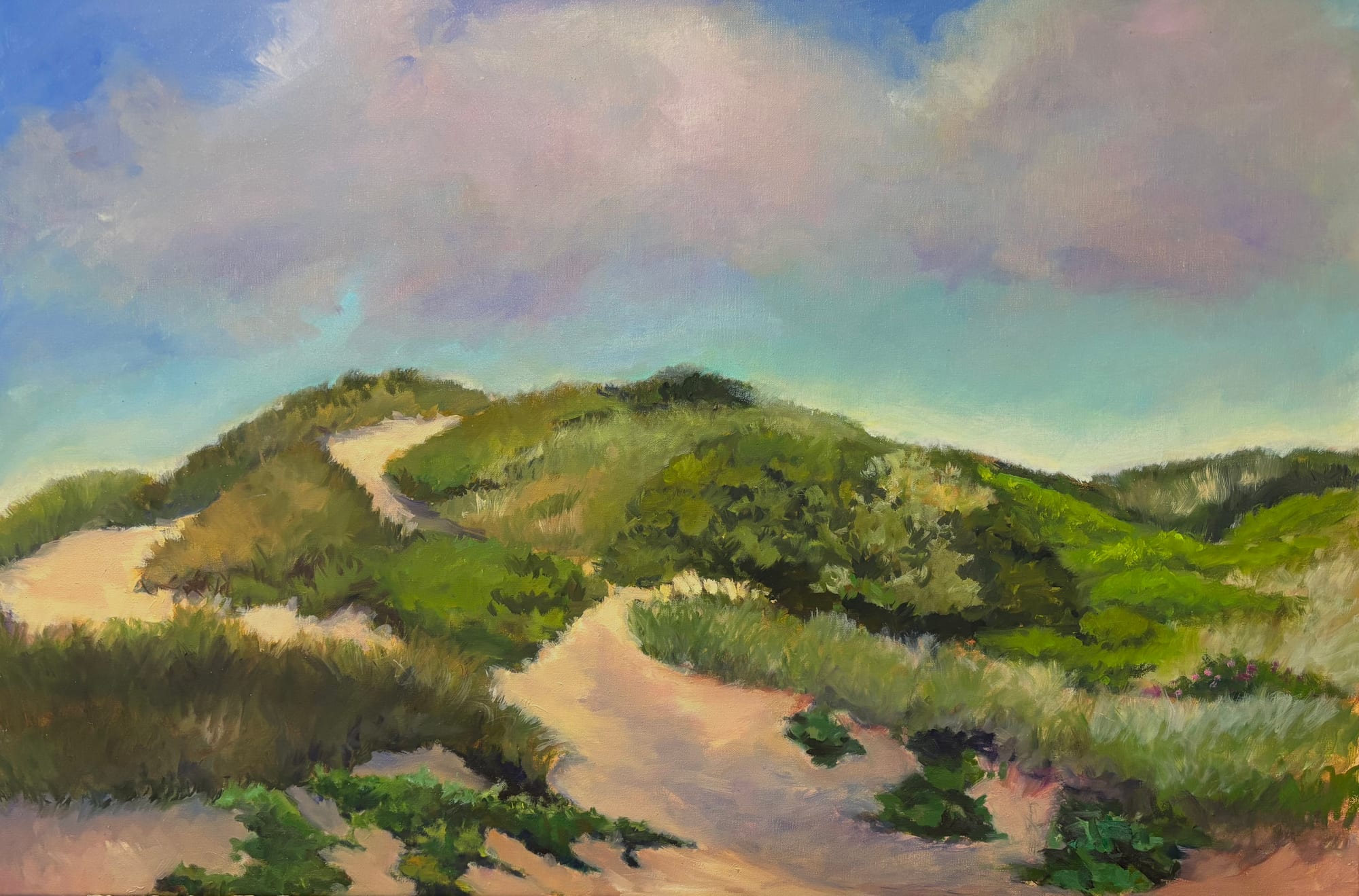
“My mission is to reflect the spirituality and beauty found in nature, capturing the light on the dunes, the sparkle on the ocean, and colors that burst in the Spring.”
Associate Artist is a standing the Lyme Art Association gives to members of at least two years who have had work accepted into three of its juried exhibitions.
What she paints
“I enjoy sharing my experience, interaction and conversations with people who stop by. Subject possibilities are endless, it can be anything from a river, ocean, scenic woodlands, or an everyday scene.”
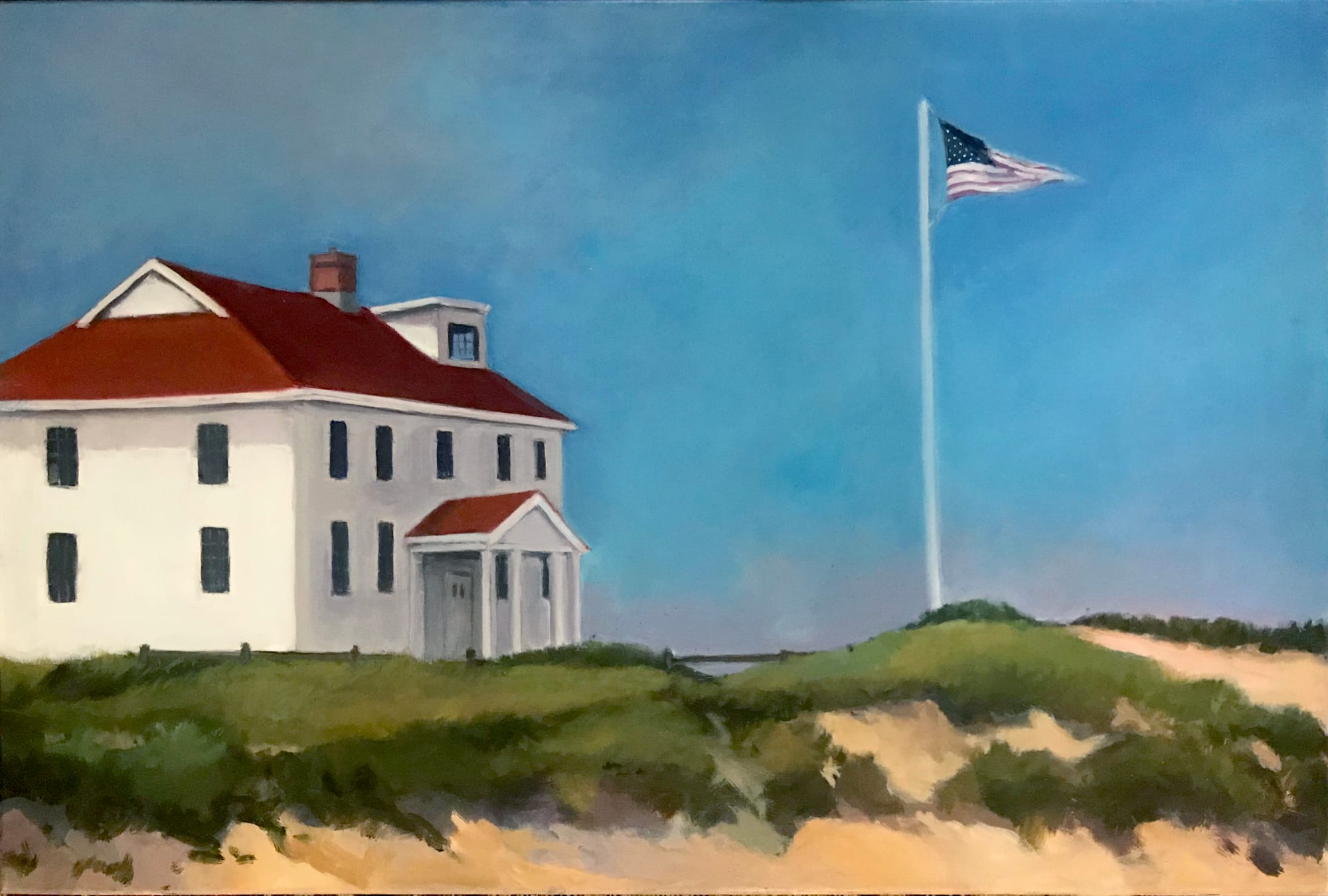
The Outer Cape runs through the work. Head of the Meadow Beach and Race Point in Truro and Provincetown, Chatham Lighthouse Beach and the Provincetown dunes appear again and again, painted in different weather and different light rather than repeated from one good day. Those are gathered in the Cape Cod collection.
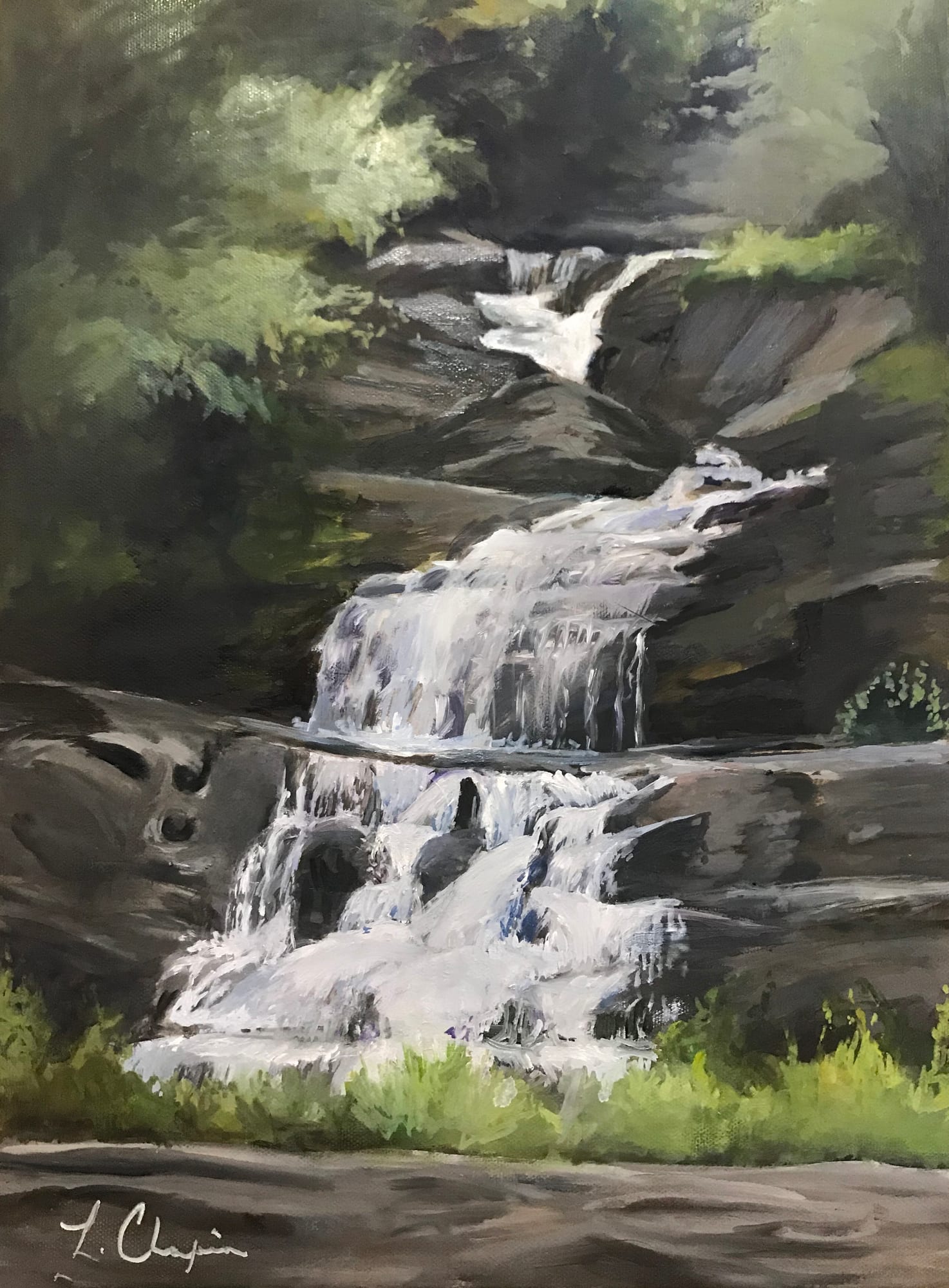
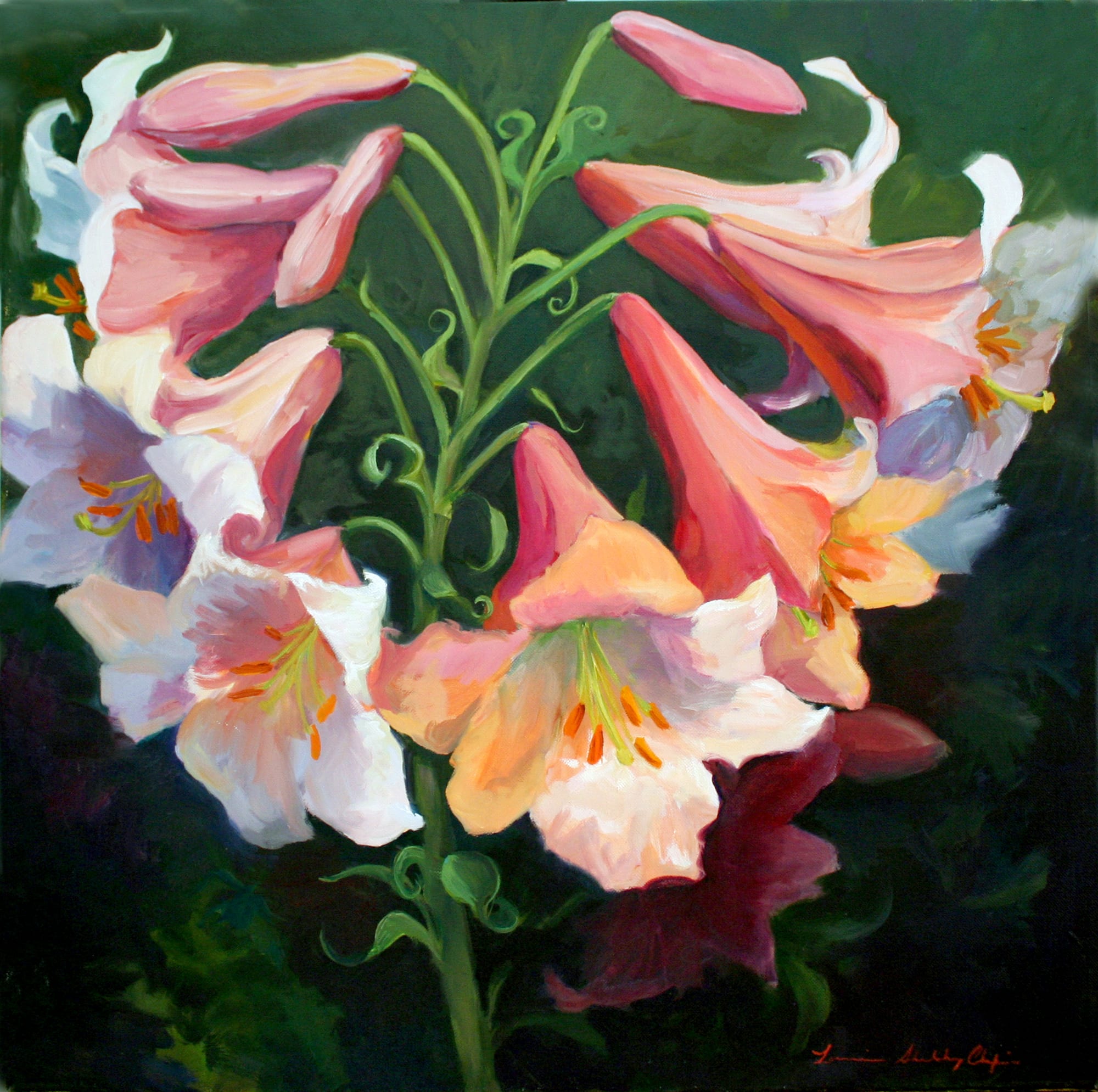
Closer to home, the subjects are the Connecticut shoreline and the hills: the water at Kent Falls, the rocks at Hammonasset, Meigs Point, marshes and fields and the odd inn on a back road. Those sit with the wider New England work in the landscapes. Then there are the things she paints when she is not standing on a beach. The garden paintings are poppies, peonies, hosta, lilies and tulips. The animal paintings are chickens and rabbits and cows and sheep, and they lead directly into the pet portraits people ask her for. The still life work is apples, peaches, cherries, clams and shells, painted from the object rather than from a screen.
Not all of it is easel-sized. She painted the mural at Burlington Veterinary Hospital in Connecticut, and she takes commissions for particular places and particular animals.
Exhibitions and awards
Her work is on exhibit at The Barn Gallery in New Fairfield and at the Lyme Art Association in Old Lyme, in her own studio in Southbury, and at local juried shows. Most recently it went to Paint the Town at the Lyme Art Association, where it took an Award of Merit in 2025.
Background
She studied graphic design at the University of Connecticut and holds an associate degree in fine art. She has painted for more than thirty-five years and has taken commissions since the late 1980s. Her work shows at The Barn Gallery in New Fairfield and goes out to juried exhibitions at the Lyme Art Association and elsewhere in Connecticut.
Memberships
Lyme Art Association. The artist-run association in the shoreline village of Old Lyme that grew out of the art colony there, with a gallery of its own and a calendar of juried exhibitions that painters across New England enter. She holds Associate Artist status there, on the terms described above, and won an Award of Merit at its 2025 Paint the Town competition.
Society of Creative Arts of Newtown. A Connecticut arts organization that runs exhibitions, gatherings and events for its member artists in and around Newtown, one town over from her studio.
Connecticut Plein Air Painters Society. The state association of painters who work outdoors on location, which organizes paint-outs and shows built around work made in the field. It is the natural home for the way she paints.
Teaching in Southbury
She teaches from her Southbury studio and at The Stable Studios in Heritage Village, in oil and acrylic, for beginners through to painters who have been at it for decades. Classes are small: her own course description says to bring a work in progress or start something new, and each painting is looked at on its own.
- Wednesday morning. Wednesdays, 9am to 12pm. Up to 12 painters.
- Wednesday afternoon. Wednesdays, 1:30pm to 4pm. Up to 12 painters.
- Wednesday evening. Wednesdays, 6:30pm to 8:30pm. Class size on request.
- One-to-one, on your schedule. Scheduled around you. One to one.
- Outdoors, when the weather allows. Runs periodically, weather permitting.
Full details, including where each one meets and what to bring, are on the classes page. There are also notes for one-to-one lessons, for painters in the Heritage Village community, and for the outdoor sessions, plus materials lists for oil and acrylic.